


Good Morning, Islanders Country
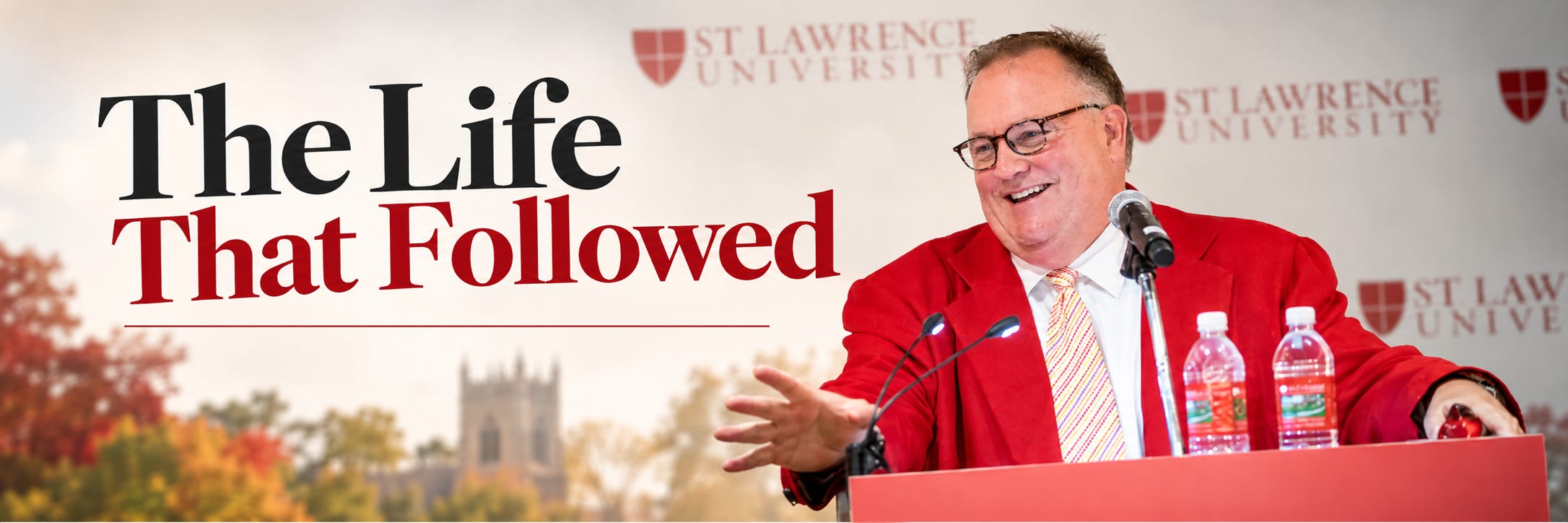
Today, we publish Part 2 of Chris Botta’s feature on Peter McGeough, the 1983 New York Islanders draft pick who suffered a devastating injury that ended his playing career and threatened to take away his ability to walk again.
ICYMI: Read Part 1 ⤵️


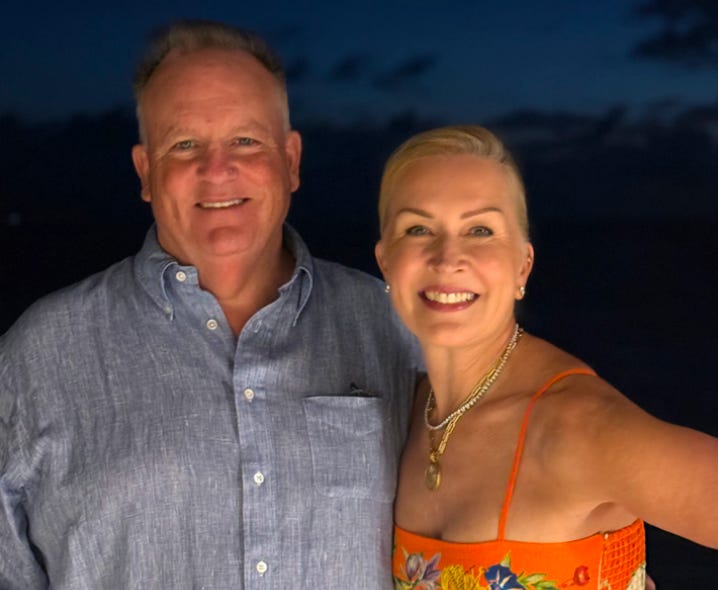
Peter McGeough is 61 now and walks with the effects of the spinal cord injury that ended his hockey career in 1988. On a night this summer in Newport, Peter and his wife, Mary, take guests to one of the best restaurants in the busiest part of town at the peak of tourist season. Throughout the journey among the crowds at Bannister’s Wharf, he smiles.
Still, every step takes work.
But to his large circle of friends, “That’s Pete.” He likes being the host. He likes bringing people together. He likes making sure they are taken care of.
The former college hockey captain was already known for being a leader before his injury. But the support he received during his recovery has stayed with him 38 years later.
“If you’re going to get hurt as a hockey player, let it happen in a tight-knit community in Canada,” McGeough said. “What the people in Sydney did for me and my family will never be forgotten.”
Far From Home
It was 1988. McGeough was in Nova Scotia – not the easiest place for his family in Rhode Island to reach. When his mother, Elaine, arrived at the airport in Sydney, she was met by a local woman named Helen, who volunteered to take her to the hospital. On the elevator to Peter’s room, Helen told Mrs. McGeough that she was welcome in her home as long as she needed.
Elaine stayed in a hotel at first. But after a few days, with costs adding up and friends far away, she accepted Helen’s invitation and stayed there every time she visited Peter.
Sylvia Colborne Martin, who showed up on day one to deliver flowers on behalf of the Cape Breton arena staff, returned every day for two months. She timed her visits around his mother’s needs, reassuring her and providing updates when Elaine could not be at Peter’s side. Sylvia became a bridge between the family and the community.
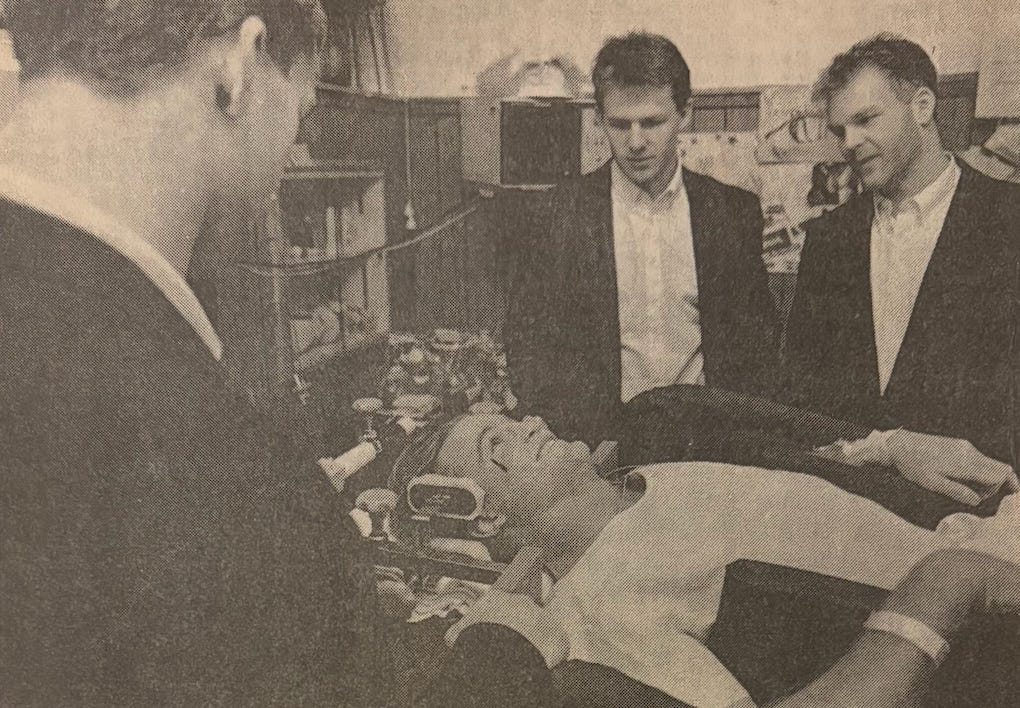
“My role was to listen,” Colborne Martin recalled. “Peter had incredible courage and strength. There was no anger. There were days when his mom might be hanging on by a thread, but she was a rock for her son. I felt blessed to get to know this family.”
Said Peter, “I’m not sure I have the words to describe what Sylvia’s visits meant to us.” The two remain friends today.
Around Sydney, signs appeared along the streets wishing Peter well. People asked what they could do. Food was sent to the hospital. Tim Hortons and the local Wendy’s helped with meals and fundraising. A fellow patient who had lost part of a leg gave McGeough a St. Christopher medal, a symbol of protection.
Said Carrie McGeough Burns, Peter’s sister, “The people in Nova Scotia treated us like we were one of them.”
Peter never forgot that. He also never forgot the care he received in Colorado, where Craig Hospital offered Carrie and her friend a vacant apartment to use for free when they moved there to be near her brother. And there was Canton, N.Y., the home of St. Lawrence University, where residents raised money and surprised him when he returned for a Saints hockey game with a new Chevy truck.
Getting Back to Normal
When Peter arrived home in Newport after a year of treatment and rehabilitation, he had only one goal.
“I wanted to get back to normal,” he said.
Getting anywhere required adjustments. He wore braces around his ankles and shins and walked with a limp. The two rods added by Dr. Courtney Brown to stabilize his back are a foot apiece. There are obstacles everywhere: stairs, uneven sidewalks, winter weather.
“Hockey was a big part of my life, and now ice is a very bad thing for me,” he said.
The emotional adjustment was also difficult.
“It took me a while to get used to how I felt people viewed me after the injury,” Peter said. “I looked different. I moved differently. I wasn’t the athlete who had some things going for him. For a brief time those things bothered me.”
In time, he pushed through the self-doubt. For a year after returning to Newport, McGeough treated rehab like a job. He worked out, swam, tried to rebuild his strength. Then one morning, after the gym, the pool, and answering mail, he looked at the clock. It was 10 a.m. His day was finished, and he knew he needed to figure out the rest of his life. He also knew that three-year contract he signed with the Islanders was going to run out.
The article in the Daily News by Sam Marchiano about McGeough’s recovery got the attention of a hockey fan from Long Island who was an executive at CCS, a fundraising company. CCS offered McGeough a job in New York and sent him around the country on campaigns.
In 1993, he moved into finance, beginning a long career at Morgan Stanley that kept him in Manhattan for ten years before he moved to a Boston office. After the pandemic, McGeough has worked mostly out of Newport. He has been with the company for 33 years.
“You Adapt”
In Newport, McGeough’s wife Mary is central to the life he has built.
They’ve known each other since training in the same gym when Peter began his recovery. They started dating in 2000 and were married in 2010. Mary is energetic, funny, and willing to put him in his place. She also knows what he needs before he asks. Watching them together, there is no fuss. Mary helps, jokes, and keeps moving.
When the weather is warm, Peter rides a bike constantly. He compares walking to riding one. If he moves too slowly, he wobbles. Once he gets going, motion helps keep him upright.
“You adapt,” he said.
“I think back to my mom’s strength after I got hurt and Carrie leaving college to move to Colorado to be at my side…People need to know this: my mother and my sister are heroes.”
He learned a great deal from Connie McClintock, one of his physical therapists at Craig. She told McGeough he was fortunate the injury happened when he was young. At 23, he did not understand Connie’s perspective, but now he does. His friends in their 60s are learning to adapt to health issues and the realities of getting older. McGeough has been adapting for nearly 40 years.
“I’m experienced at it,” he said. “I know what I’m looking for every day. I know what’s coming. I’m prepared.”
The son Elaine McGeough flew to Sydney to care for is now one of the people caring for her. Peter and Carrie help look after Elaine, who is now in her mid-80s. Her residence is just a few blocks from Peter’s.
Said Peter, “I think back to my mom’s strength after I got hurt and Carrie leaving college to move to Colorado to be at my side…”
The memory moves him to tears. After he gathers himself, he says, “People need to know this: my mother and my sister are heroes.”
Showing Up
Carrie McGeough Burns said her brother will always hate asking for help. She hopes this will change as he gets older and is almost certain to need a little more assistance. But for now, he would rather give it. Sometimes he can be stubborn, blunt and impatient – “Jekyll and Hyde,” she says, laughing. He also makes sure everyone around him and their families are doing okay.
“He’s not going to want this known publicly,” said Carrie, “but he would give anything to anyone. It’s just who he is. It’s who he always has been.”
When 16-year-old Teddy Balkind, a sophomore at St. Luke’s School in New Canaan, Conn., died in 2022 after suffering a fatal neck injury in a hockey game, McGeough was there for Teddy’s father, John, a close friend from their years as students at St. Lawrence and later as young executives in New York City. Peter and others in their circle traveled to be near the family. They sat outside in the cold and snow around a fire pit and texted John to tell him that whenever he needed them, they would be there.
McGeough remembers what strangers did for his family. The people who know him best say he has spent much of his life doing the same.
“After the hell Peter went through, it could have gone one of two ways. It went the way I expected,” said Hank Lammens, his teammate in college and fellow Islanders draft pick. “He made an incredible comeback, and that’s a testament to the person he is. Look at the success he’s had and how he shows up for people when they’re hurting. There’s really no one like him.”
Years after telling the Daily News, “I don’t feel very strong,” McGeough thinks differently. “I’m not the guy that should be helping you move a couch up the stairs,” as he puts it, but he has found other ways to be useful.
“I guess it’s a different kind of strength,” he said.
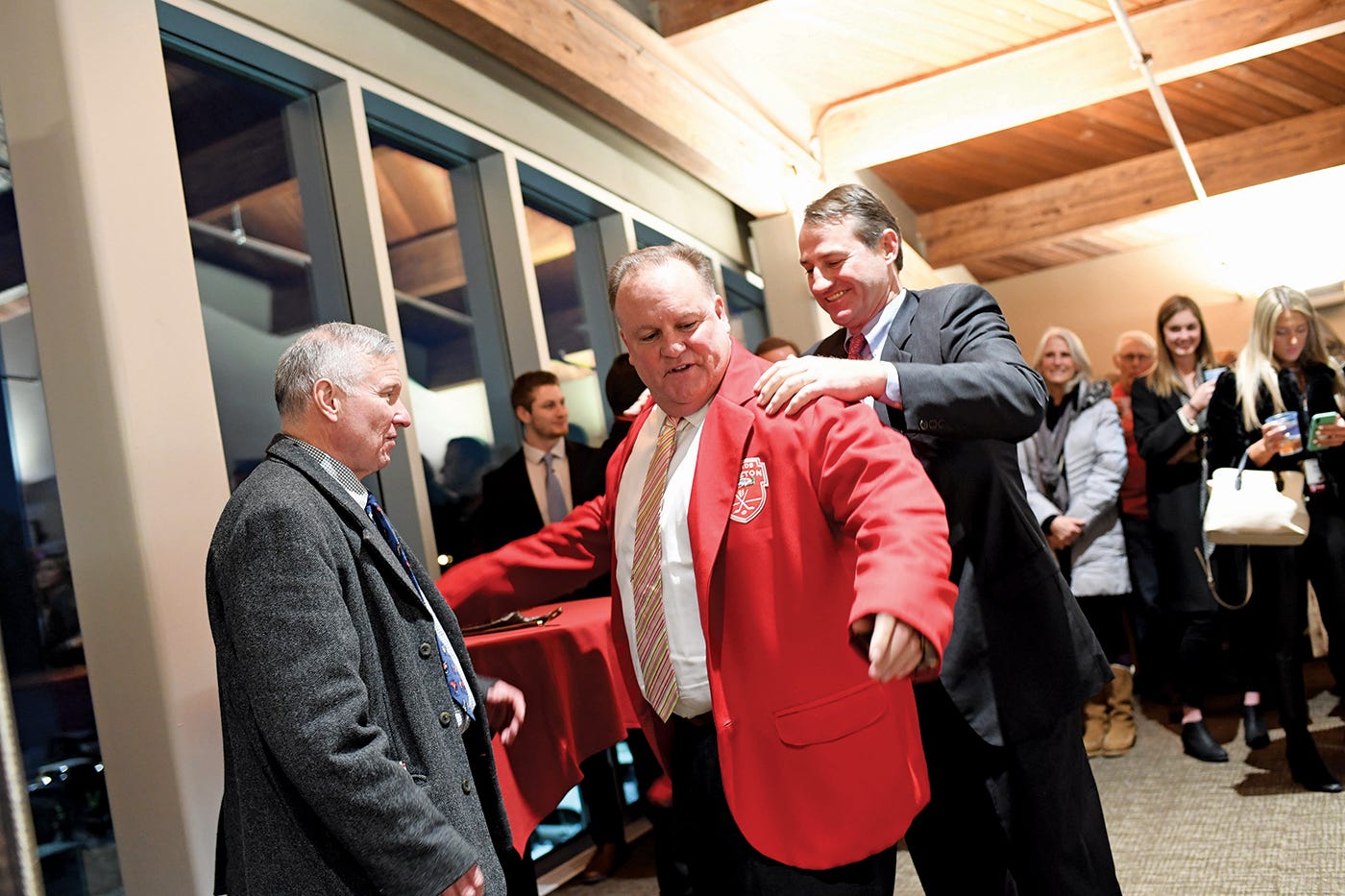
At St. Lawrence, McGeough remains a big part of the hockey program. The Peter McGeough Award is given to the team’s top defenseman. In 2020, he was named a Legend of Appleton, an honor recognizing people whose play, commitment, and impact helped shape St. Lawrence. For McGeough, the honor reflected his college career and his loyalty and lasting connection to the school. He joined a short list of honorees that includes Bill Torrey.
“Pete is a champion of life,” said Pierre McGuire, who was an assistant coach for two of McGeough’s seasons at St. Lawrence. “He played the game with amazing passion. He fought for his team like no one else. Peter has always had an incredible ability to make anyone he meets feel like they are the most important person in his life. I feel blessed to call him a friend.”
When McGeough talks about his goal of enjoying 80 summers, he has people in mind who did not get that much time. Six of his St. Lawrence teammates have died. They include Richie Stewart and Mike Pelletier, who worked for Cantor Fitzgerald and were killed in the terrorist attacks on the World Trade Center on Sept. 11, 2001. Ray Shero, the college teammate who negotiated Peter’s Islanders contract, died in 2024 at age 62 after a battle with cancer.
Then there is Duncan MacPherson, the Islanders’ first-round pick in 1984 who shared that first Springfield apartment with Peter and Hank. MacPherson disappeared during a ski trip in Austria in 1989. Fourteen years later, his remains were discovered in the melting ice of a glacier.
Peter wore the St. Christopher medal that he received from a fellow patient in Sydney for 25 years. McGeough had rebuilt his life. He was back on his feet, working and married, with a full life of his own. The medal, he decided, belonged somewhere else. He thought of a close friend, Jeff, who was going through a series of personal challenges.
“You need this more than I do,” he said.
He was able to pass on the medal because, while there are hard days, McGeough knows how much he still has.
“I’m happy to be here,” he said. “Do I want to be better? Sure I do. Is that in my control? Sometimes no. But I look around the world and I feel pretty lucky.”
When asked how he got through it, he gave a simple answer.
“There is something better on the other side of where you are right now,” he said. “You have no choice but to keep moving. My focus is on the good years ahead and how many times I can say, ‘Yes.’ The goal is to take advantage of all the summers I have.”
Thanks for reading! Follow us on Twitter for regular updates until the next newsletter.
And please check out our newsletters about the Knicks and Mets, too.